01 / Overview
A combat level built around changing pressure
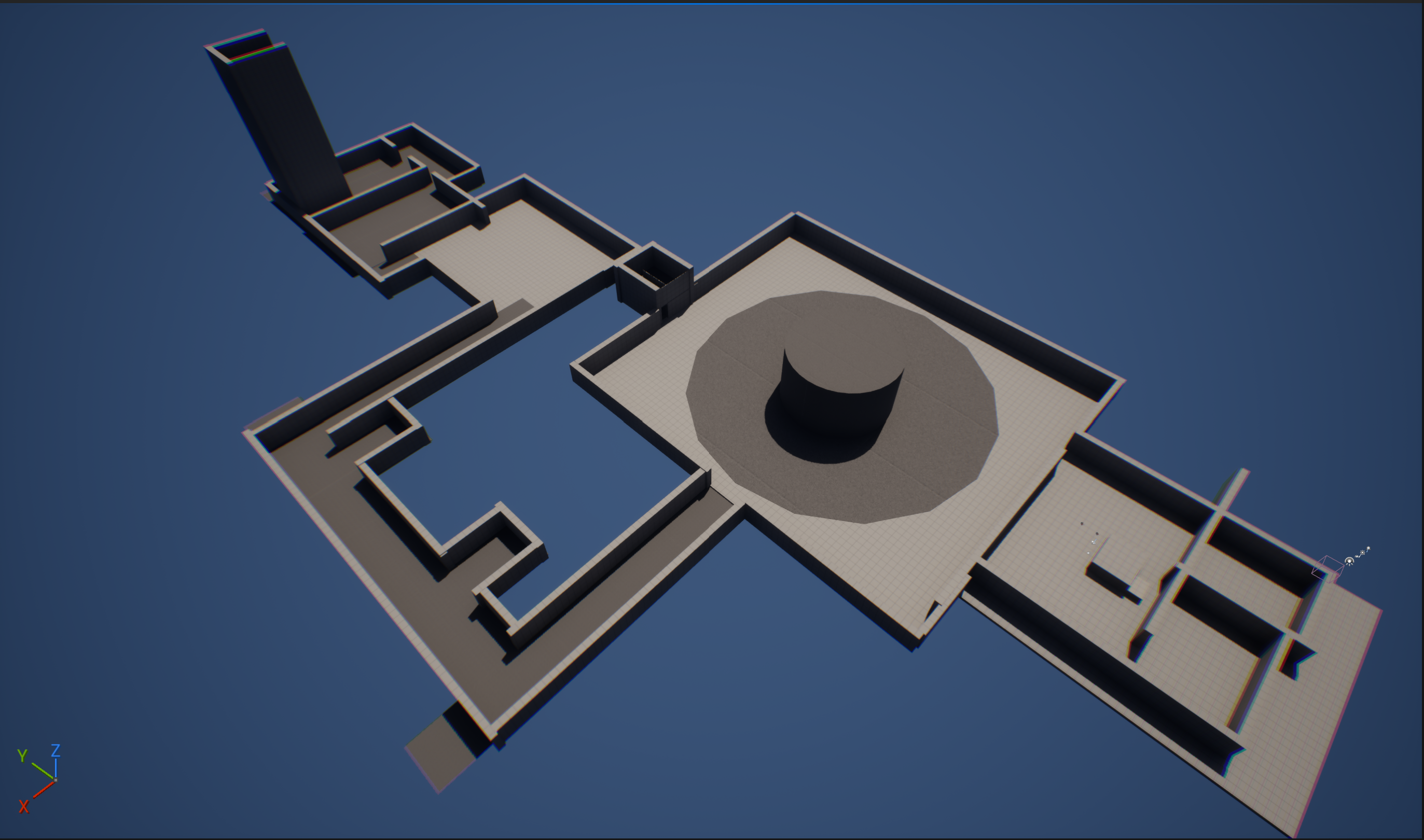
Rude Awakening begins as an escape from a sealed barracks and expands into a sequence of distinct encounter spaces. The design alternates between combat pressure, movement challenges, backtracking, and environmental interaction so each area changes what the player is paying attention to.
The current milestone establishes the complete route, room scale, sightlines, and major spatial transitions while moving the central arena into its first Blueprint logic pass. The set-piece graph is active work, not a finished implementation.
Escalate
Open with constrained discovery, then widen into a sustained central encounter with resources, pressure, and more than one way forward.
Reset
Use the laser hall as a deliberate breath between action peaks, shifting the challenge from target priority to patience and movement timing.
Recontextualize
Return the player through familiar space after collecting a keycard, changing previously safe rooms through enemy spawns and new access.
02 / Level Flow
One route, four shifting verbs
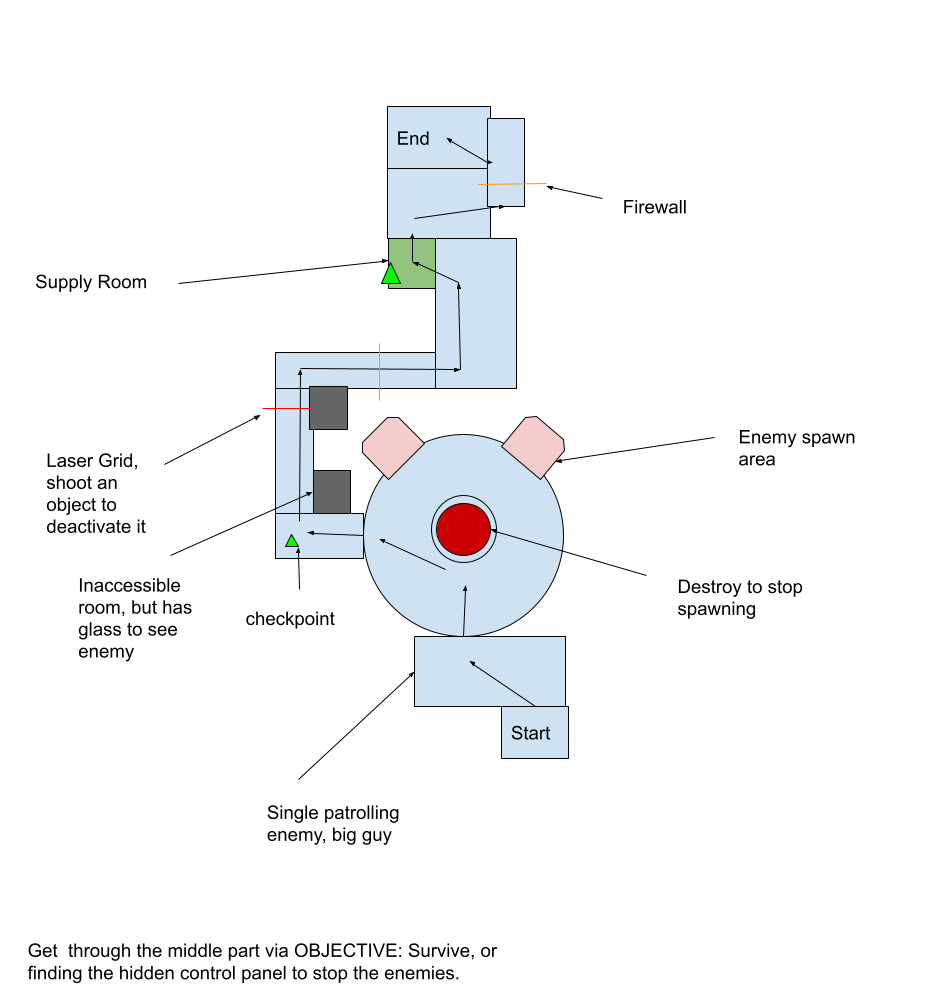
The plan uses a mostly readable critical path while varying the player's immediate goal at each stage.
- Discover. Read the opening room, reveal the concealed exit, and cross into the first threat.
- Survive or investigate. Hold the central arena until the encounter resolves, or locate the hidden control route that shuts the spawning down early.
- Traverse. Move through a laser-grid corridor that rewards crouching, sliding, observation, and timing.
- Retrieve and escape. Secure the keycard, fight back through a changed space, disable the firewall, and reach the elevator reveal.
03 / Blockout
Testing scale before scripting
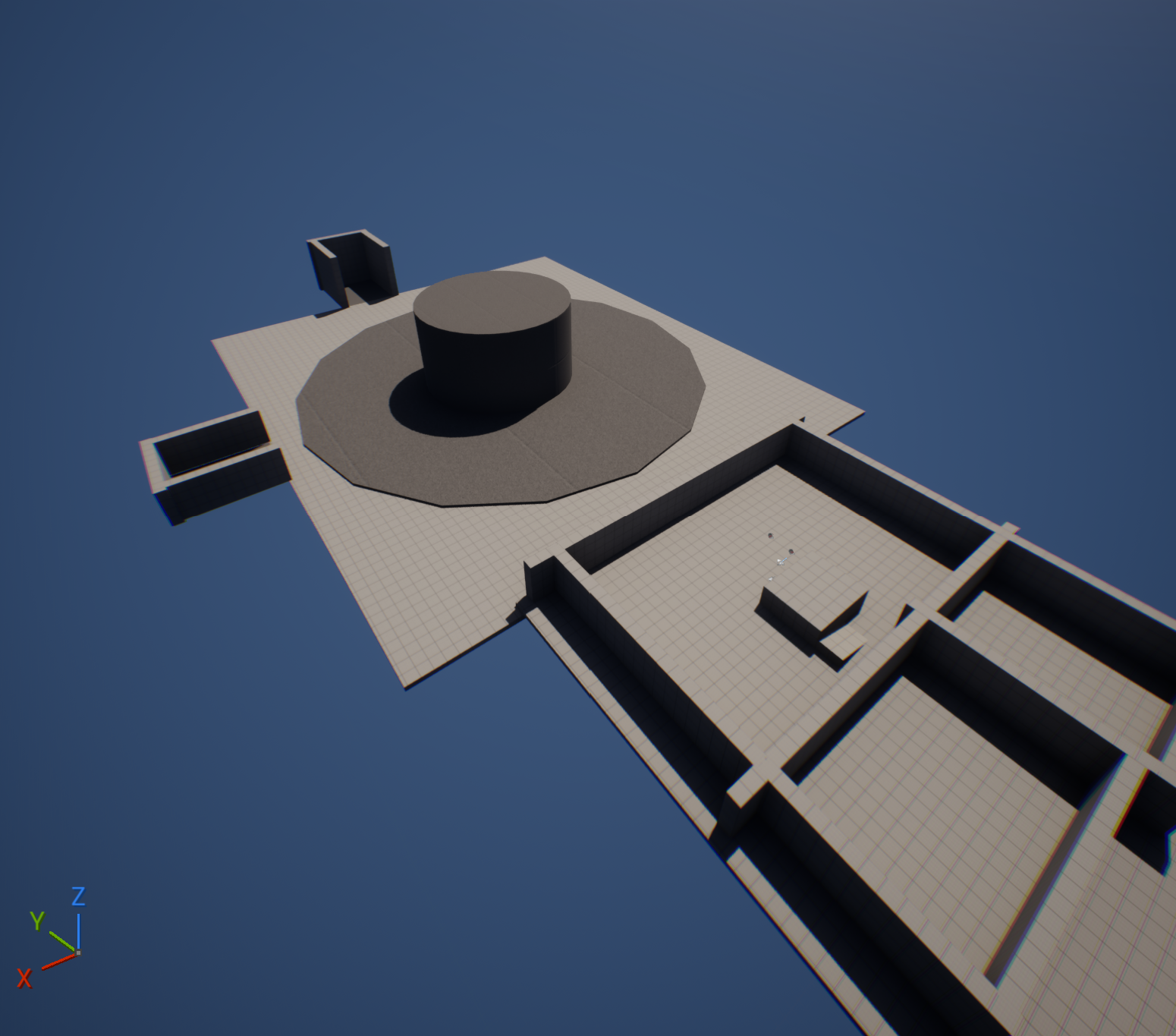
The first pass prioritized a playable route over visual finish. Open thresholds stand in for doors, ceilings are intentionally absent, and large simple forms make circulation easy to evaluate in-editor and in Play In Editor.
The circular arena became the primary scale check: its outer ring needs to support sustained movement around the central core while still connecting clearly to the opening room, side routes, and later corridor network.
04 / Set Piece
A substantial area with its own orchestration
Blueprint: Set Piece is my label for a substantial level area that owns significant logic and has many smaller moving parts to coordinate. For the main-core arena, that means treating the space as more than geometry: entry recognition, gates, timing, damage, and encounter progression all need to operate as one authored sequence.
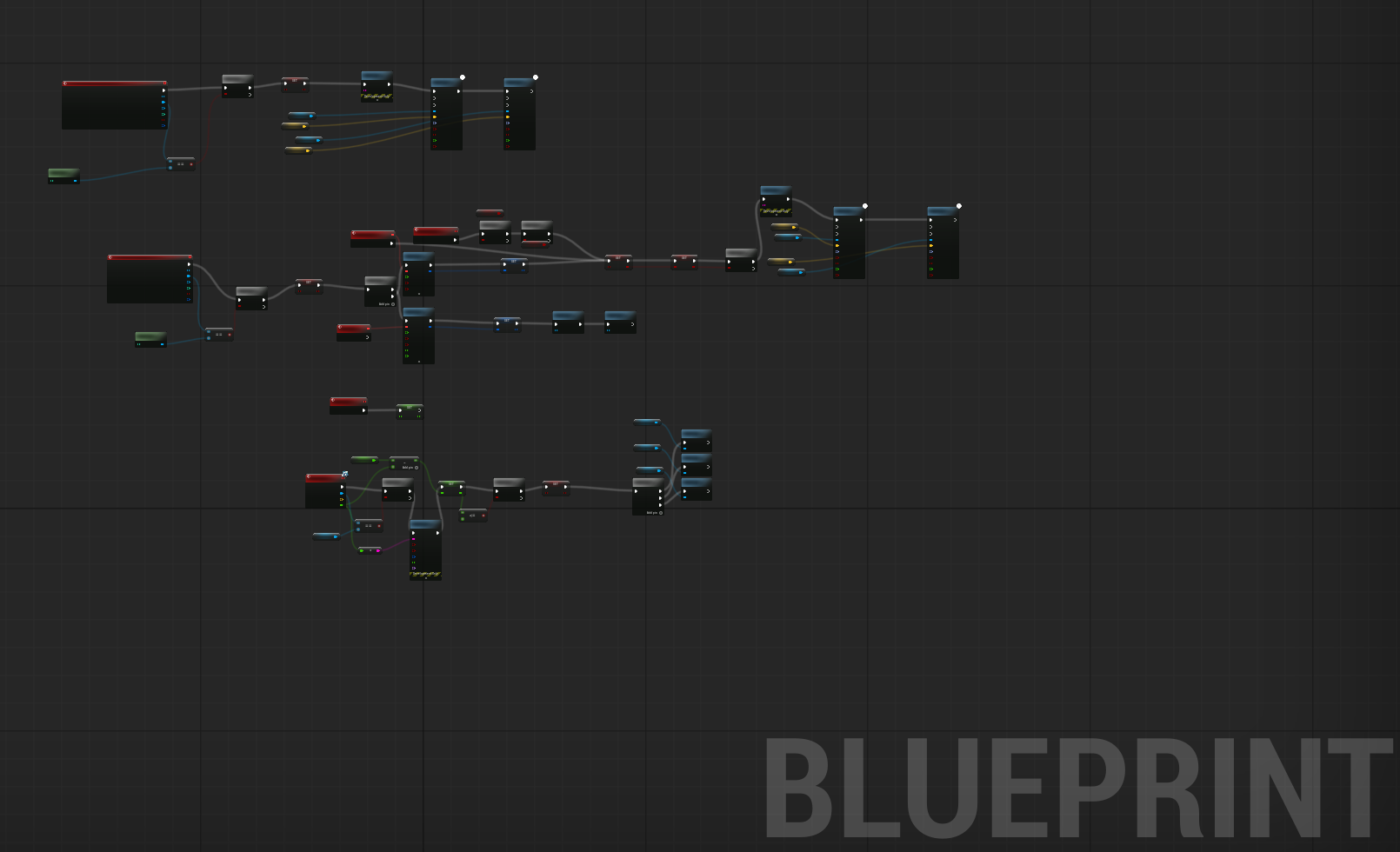
The graph below is the initial BP_MainCore pass. It establishes the first orchestration paths, but both the Blueprint and the set piece are still incomplete and will continue changing through implementation and playtesting.
BP_MainCore / Overview
Initial set-piece logic graph
Geometry / Modeling Mode
One authored mesh, not four stacked pieces
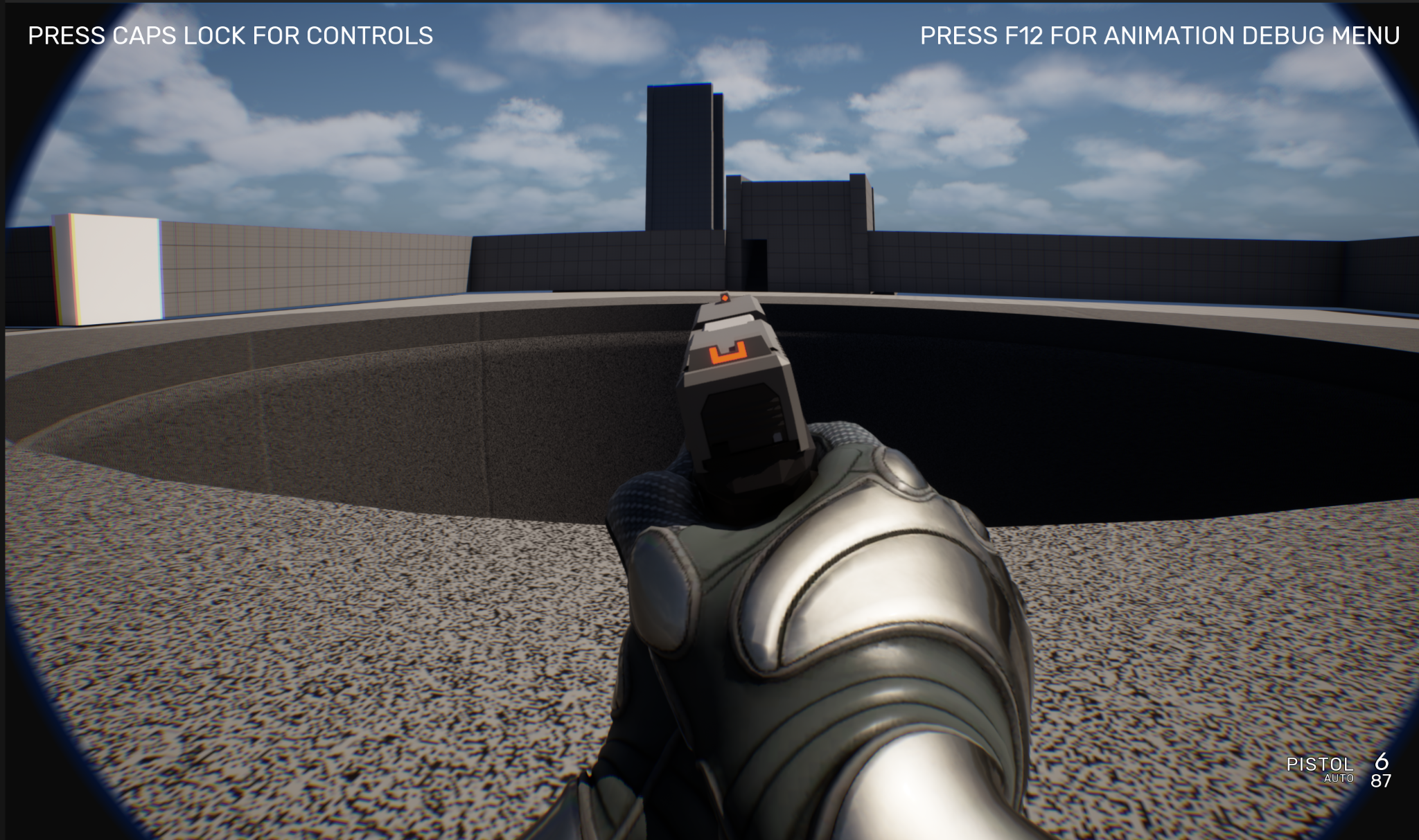
The circular arena surface is a single mesh built to the shape required by the encounter.
- Shape the working geometry into the intended arena profile.
- Use Boolean operations to cut the required openings.
- Use Unreal's modeling tools to consolidate four working pieces into one mesh.
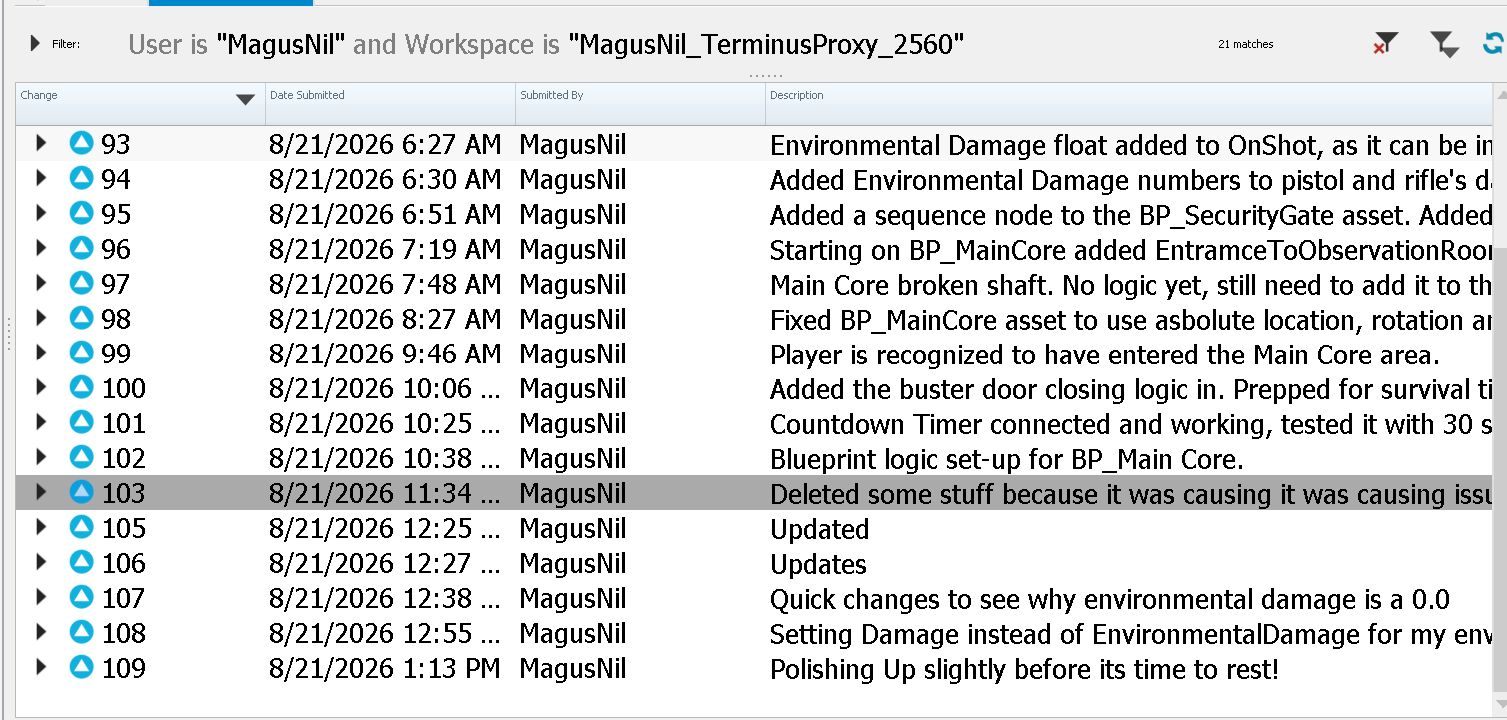
Backup geometry existed during the process, then was removed once the consolidated asset became the working version. Perforce changelist #103 preserves that cleanup point.
Perforce / Submitted Work
Versioned iteration, including the cleanup
Changelists 93–109 capture the initial set-piece work as it moved through environmental damage, security-gate sequencing, player-entry recognition, survival timing, BP_MainCore logic, cleanup, and polish.
The highlighted changelist #103 records the cleanup after the backup geometry was deleted. Open full resolution ↗
05 / Process
Design walkthrough and blockout session
These videos document the current design pass and the level's initial construction. They are process records, not a finished gameplay showcase.
09 min / Commentary
Initial level-design walkthrough
The current design plan explained section by section, including encounter intent, progression logic, and implementation questions.
26 min / Process
Initial level blockout
A real-time look at the first graybox pass. Audio is muted by default because the construction process is the focus.